




















 Back
Back
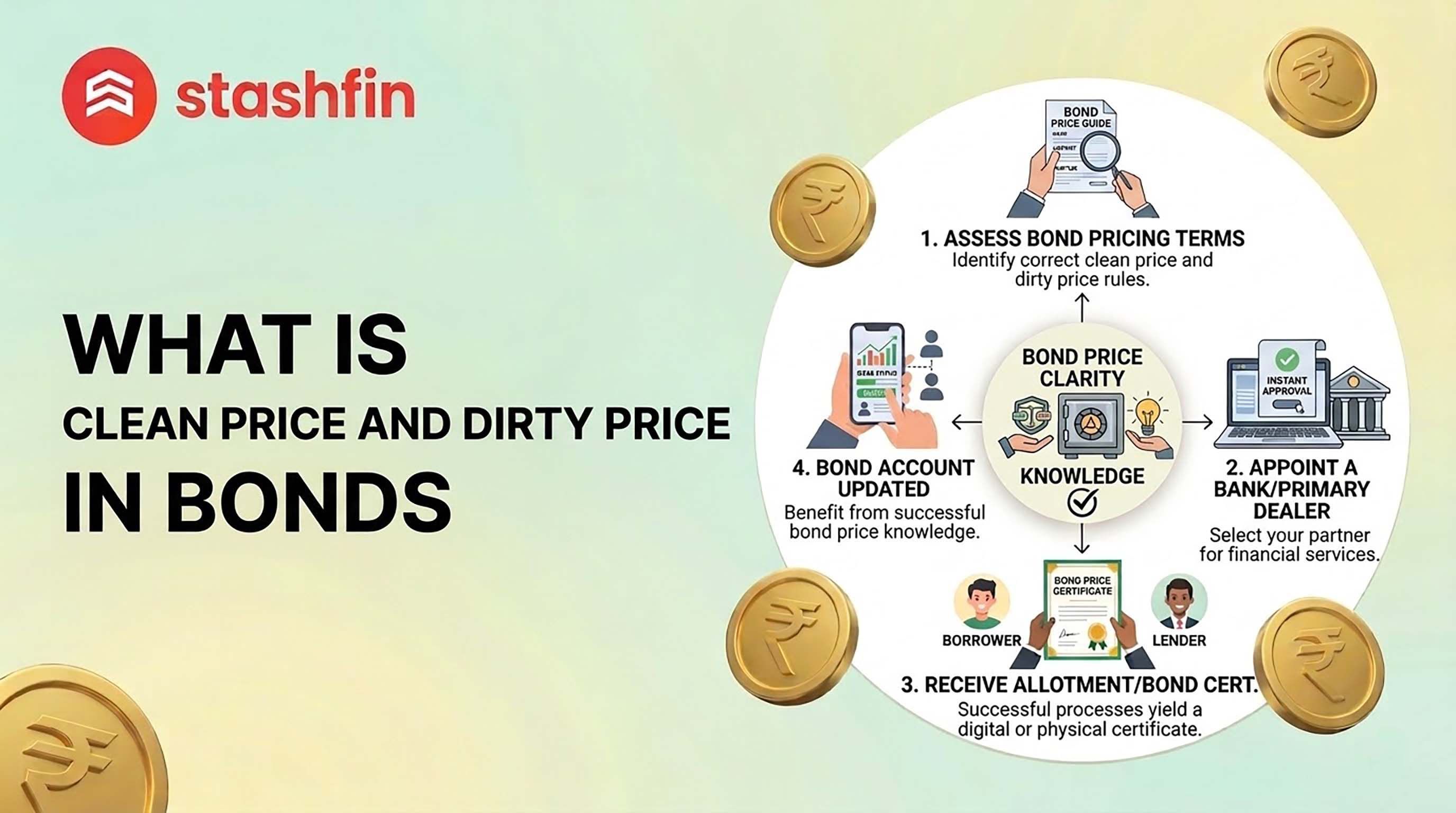

What is Clean Price And Dirty Price in Bonds?
At its simplest, the Clean Price is the price of a bond excluding any interest that has built up since the last payment. The Dirty Price is the "all-in" price—it includes the clean price plus the Accrued Interest.
This comprehensive 2026 guide demystifies bond pricing for retail investors. Learn why bonds are quoted at a "Clean Price" but settled at a "Dirty Price," how to calculate Accrued Interest, and how these pricing models impact your tax liability and investment strategy.
The Core Concept: Why Two Prices?
Bonds are unique because they earn interest every single day, but they only pay that interest periodically (usually every 6 months).
If you buy a bond midway through a coupon period, you are stepping into an investment that has already "earned" some interest for the seller. To be fair, you must compensate the seller for those days they held the bond.
- Clean Price: The "pure" market value of the bond. It fluctuates based on interest rate changes and the issuer's credit risk.
- Dirty Price: The actual amount of cash that leaves your bank account to settle the trade. It is also known as the Settlement Price or Full Price.
What Is Accrued Interest?
Accrued interest is the "invisible" engine that creates the gap between Clean and Dirty prices. It is the interest that has accumulated on a bond since the last coupon payment date but has not yet been paid out to the holder.
The Logic of Fairness:
When the next coupon date arrives, the bank or issuer will pay the entire 6-month interest to whoever holds the bond at that moment. Since you (the buyer) will receive the full payment, you must "reimburse" the seller upfront for the portion of the interest they earned while they owned it.
Key Differences at a Glance
| Feature | Clean Price | Dirty Price |
|---|---|---|
| Also Known As | Flat Price / Quoted Price | Full Price / Settlement Price |
| Accrued Interest | Excluded | Included |
| Market Quotes | Used for listings & newspapers | Not usually shown on quotes |
| Actual Payment | Does not represent cash outflow | The total amount paid by buyer |
| Behavior | Stable (moves with market) | Increases daily until coupon date |
Why the "Dirty Price" Resets
One of the most interesting behaviors of a bond is that the Dirty Price follows a "sawtooth" curve.
- As each day passes, the Dirty Price climbs higher as interest accrues.
- On the day the coupon is paid, the accrued interest drops to zero.
- At that exact moment, the Clean Price equals the Dirty Price.
- The next day, the "dirty" accumulation starts all over again.
Tax and Strategy Implications in 2026
Understanding these prices is vital for your tax filings:
- Capital Gains: In India, capital gains are generally calculated on the Clean Price difference.
- Interest Income: The "accrued interest" you pay the seller is often deductible against the full coupon you receive later, ensuring you are only taxed on the interest you actually earned during your holding period.
Conclusion
"Buy clean, pay dirty"—this is the unofficial mantra of the bond market. The Clean Price allows you to compare different bonds fairly without the "noise" of timing, while the Dirty Price ensures that both buyer and seller are compensated accurately for every single day of ownership.
By mastering the difference between Clean and Dirty prices, you ensure that there are no surprises during your settlement and that you can calculate your true yield with precision.

